
Drain odors that smell like sewage or rotten eggs indicate a plumbing system issue inside your home. The cause can range from minor organic buildup to vent blockages or sewer line failure. This guide explains the most common causes, health risks, and the correct fixes based on severity.
What causes sewer or rotten egg smells in residential plumbing?
Sewer smells in a home are usually caused by organic buildup, sewer gas escape, trap failure, vent blockage, or main sewer line problems.
Sewer gas forms when wastewater breaks down inside the drain and sewer system. It contains gases such as methane and hydrogen sulfide. Hydrogen sulfide produces the distinct rotten egg odor that homeowners notice first. Methane is odorless but flammable, which makes proper ventilation important.
In a functioning plumbing system, sewer gas remains inside pipes and exits safely through the plumbing vent system on the roof. Water filled traps beneath sinks, tubs, and floor drains create a barrier that blocks gases from entering living spaces. When this barrier fails or pressure inside the system becomes unbalanced, gas escapes through drains.
Odor intensity varies based on airflow, temperature, and moisture levels. A localized smell in one bathroom often points to a trap or fixture issue. A whole house smell usually signals a vent restriction, sewer line obstruction, or pressure imbalance in the drainage system.
Sewer gas accumulates when drains dry out, debris builds up, or wastewater flow becomes restricted. The smell travels upward through pipes and escapes at the nearest opening. Identifying whether the odor is localized or affecting the entire house helps determine the correct repair approach and urgency level.
Can dirty or partially clogged drains cause bad smells?
Yes. Organic debris trapped inside drains creates bacterial growth that produces foul odors.
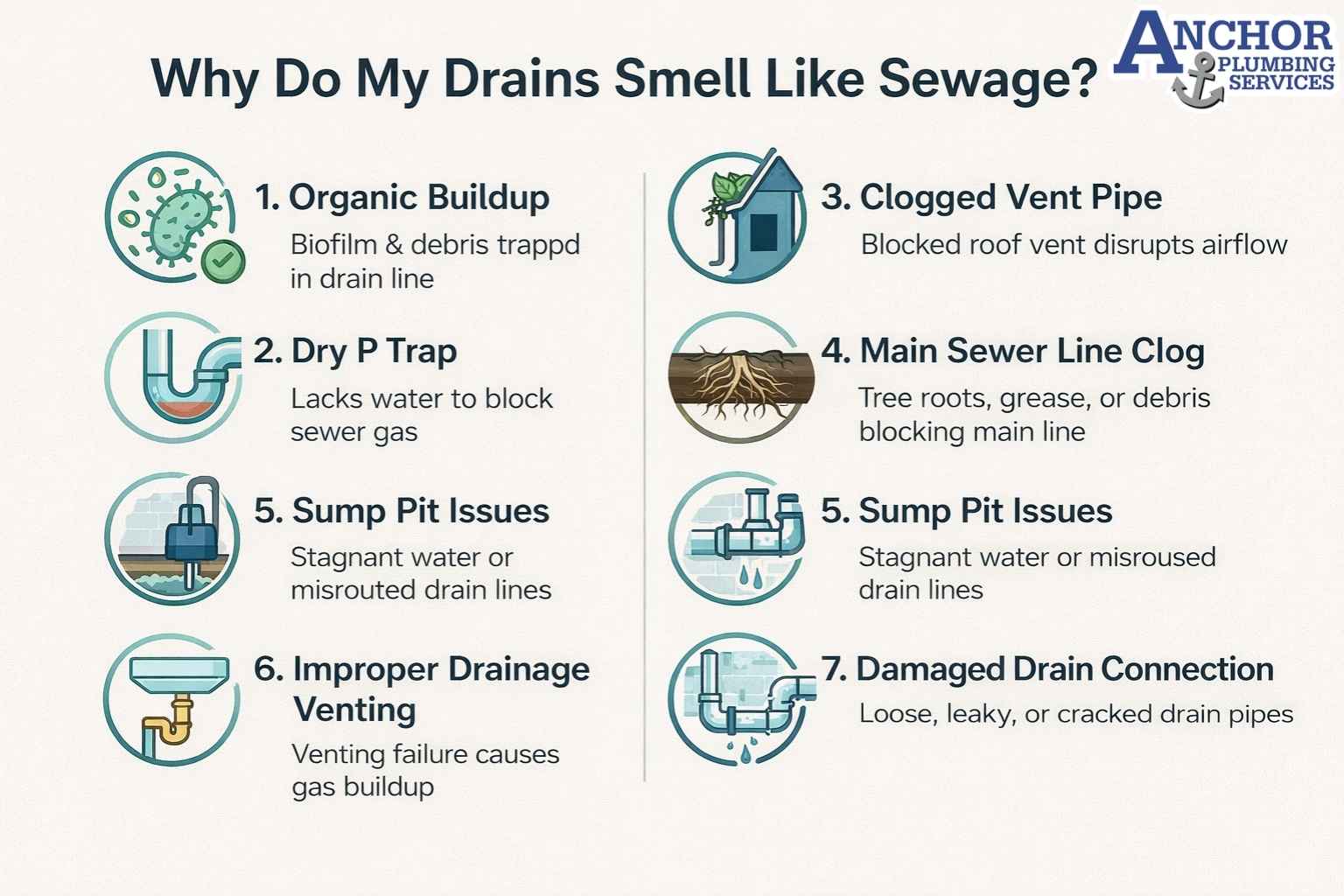
Grease, hair, soap residue, and food particles build up along the inner walls of a drain line over time. This buildup creates a sticky layer where bacteria multiply. As bacteria decompose trapped organic material, they emit gases that produce a sour, sewage, or rotten egg smell.
Biofilm often forms inside slow moving drains. Biofilm is a slimy bacterial layer that clings to pipe surfaces and traps additional debris. As the organic matter decomposes, hydrogen sulfide develops and emits a strong odor that travels back up through the fixture.
This type of odor is usually limited to a single fixture such as one sink, shower, or tub. The smell may worsen when water runs because moving water disturbs the buildup and releases trapped gases.
Mechanical cleaning removes visible debris from accessible traps and drain openings. Removing and cleaning the drain trap beneath a sink often eliminates odor at the source. When buildup extends deeper into the drain line, professional drain cleaning restores full pipe diameter and removes bacterial residue completely. Proper cleaning prevents recurring odor caused by grease buildup and organic decomposition.
Why does a dry P trap cause sewer gas to enter your home?
A dry P trap allows sewer gas to bypass the water seal and enter your living space.
A P trap is the curved section of pipe beneath sinks, tubs, showers, and floor drains. It holds a small amount of water that creates a trap seal. This water barrier prevents sewer gas from traveling upward from the drainage system into the home.
When a drain remains unused, the water inside the trap gradually evaporates. Evaporation occurs faster in warm climates and in bathrooms or laundry rooms with low humidity. Unused guest bathrooms and floor drains are common sources of dry traps.
Once the trap seal evaporates, nothing blocks sewer gas. Odors then rise directly through the open drain. The smell may appear suddenly after several weeks of non use.
Running water for thirty to sixty seconds usually restores the trap seal. For rarely used drains, adding a small amount of water periodically prevents evaporation. If odors continue after restoring water, the trap installation may require inspection to ensure it is properly connected and vented.
Can a clogged or damaged vent pipe cause plumbing odors?
Yes. A blocked vent pipe disrupts airflow and forces sewer gas back through drains.
A vent stack runs vertically through the roof and connects to the plumbing system. Its purpose is to vent sewer gas safely outside and balance air pressure inside the drain lines. When airflow remains balanced, wastewater flows smoothly and gases exit through the roof instead of entering fixtures.
When a vent pipe becomes blocked by debris, leaves, or animal nests, pressure imbalance develops inside the plumbing system. As water drains, negative pressure can pull water out of traps or push sewer gas backward into sinks, tubs, and showers.
Odors often worsen during water use because draining fixtures increase pressure changes inside the pipes. Multiple fixtures emitting odor at the same time usually signals a vent blockage rather than a single drain issue.
Vent inspection identifies visible obstructions at the roof opening. Professional clearing restores airflow and pressure balance. Proper ventilation ensures sewer gas vents outside and prevents repeated odor problems throughout the home.
Can a main sewer line clog cause a sewage smell in your house?
Yes. A main sewer line clog can force wastewater and gas back into multiple drains.
The main sewer line carries wastewater from every sink, toilet, shower, and appliance in your home to the municipal sewer system. When this line becomes restricted by grease buildup, tree roots, scale, or debris, wastewater cannot flow freely. As pressure builds inside the pipe, sewer gas and wastewater begin to back up.
Common symptoms include gurgling sounds from toilets, foul odor from a floor drain, or a strong sewage smell when the washing machine discharges. Because the main sewer line serves the entire home, multiple fixtures are usually affected at the same time. You may notice slow drainage throughout the house rather than in just one sink.
This situation carries higher severity. Sewer backflow can push contaminated water into showers, tubs, or floor drains. Exposure increases health risks and can damage flooring and drywall.
A sewer camera inspection confirms the exact location and scope of the blockage. Professional cleaning through the exterior cleanout removes the restriction and restores full flow. Addressing the main sewer line promptly prevents sewage backup and eliminates widespread odor that spreads through multiple drains.
Can a sump pump or basement drain cause persistent sewer odor?
Yes. Stagnant water or improper wastewater routing into a sump pit can create foul odors.
A sump pump system is designed to collect groundwater from around the foundation and discharge it safely away from the home. Groundwater itself typically has little odor. However, problems arise when wastewater from fixtures or floor drains is incorrectly routed into the sump pit.
When organic material enters the sump pit, water stagnates and accumulates debris. Stagnation allows bacteria to grow, producing unpleasant smells that resemble sewage. Even without direct wastewater input, standing water that does not circulate can develop a musty odor over time.
Improper drainage path connections between the plumbing system and the sump pit increase odor risk. Sewer gas may also escape through poorly sealed sump covers.
Inspecting the sump pit for proper routing and ensuring only groundwater drains into it prevents odor. Cleaning accumulated debris and sealing the sump cover reduces gas escape and eliminates persistent smells in lower levels of the home.
Is sewer gas dangerous to your health?
Sewer gas contains methane and hydrogen sulfide, which can cause respiratory irritation and pose safety risks in high concentrations.
Hydrogen sulfide is the compound responsible for the rotten egg odor. At low concentrations, it irritates the eyes, throat, and respiratory system. Short exposure may cause headaches, nausea, or dizziness. Prolonged exposure at higher concentration levels can affect breathing and increase health risk.
Methane is odorless but highly flammable. When methane accumulates in enclosed spaces without proper ventilation, it increases fire and explosion risk. Although typical residential plumbing leaks release small amounts, a persistent strong odor signals that gas is accumulating rather than venting properly.
Odor intensity often increases in poorly ventilated rooms such as bathrooms or laundry areas. Outdoor sources such as nearby sewer infrastructure or natural decomposition in storm drains can sometimes contribute mild external odors, but persistent indoor smell usually indicates a plumbing system issue.
A faint occasional smell may reflect minor trap evaporation. A strong, persistent odor affecting multiple rooms becomes a plumbing emergency and requires immediate inspection to prevent gas accumulation and protect indoor air quality.
How can you tell whether the smell is minor or a serious plumbing problem?
Localized odors from one drain are often minor, while whole house smells usually indicate a vent or sewer line issue.
A simple decision framework helps differentiate severity:
If the smell comes from one fixture only, the issue usually indicates organic buildup or a dry trap. Cleaning the drain or restoring the trap seal often resolves the odor.
If the smell becomes stronger when water runs, the pattern signals a vent pipe issue. Vent blockage disrupts airflow and forces sewer gas back through the nearest fixture.
If multiple drains produce odor and you hear gurgling sounds, the pattern indicates a main sewer line restriction. A clogged sewer line affects several fixtures at the same time.
If the odor is strongest in a basement or near a floor drain, the issue often relates to a sump pit, floor drain trap, or underground sewer connection.
Scope and timing differentiate minor issues from serious plumbing problems. Single fixture smell indicates localized restriction. Multiple drains and system wide odor signal a larger sewer or vent system concern that requires professional evaluation.
How can you prevent drain and sewer odors in your home?
Preventing sewer odors requires regular drain maintenance and ensuring trap and vent systems function properly.
Routine maintenance prevents organic buildup and reduces the risk of sewer gas entering living spaces. Grease, food waste, soap residue, and hair should never be allowed to accumulate inside a drain line. Avoid pouring grease or oil down kitchen drains because grease cools, hardens, and narrows pipe diameter over time.
Run water in unused sinks, tubs, or floor drains at least once per month to maintain the trap seal. The water barrier inside a P trap blocks sewer gas from entering the home. Evaporation in unused drains removes that barrier and allows odor to escape.
Schedule periodic professional drain cleaning to remove biofilm and internal buildup before odor develops. Annual or biannual service helps maintain sewer line performance and reduces emergency risks.
Inspect plumbing vent systems and sump areas for blockage or stagnation. Proper airflow through the vent system maintains pressure balance and prevents gas from being forced back through fixtures.
Consistent monthly checks and preventive maintenance reduce odor recurrence and protect the entire plumbing system.
How Anchor Plumbing Services diagnoses and fixes sewer odors in San Antonio
Anchor Plumbing Services diagnoses sewer odor issues using a structured Inspect, Diagnose, Quote, Repair, and Test process designed to restore safe plumbing performance in San Antonio homes.
Technicians begin by inspecting affected fixtures, trap seals, vent systems, and the main sewer line. Sewer camera inspections allow accurate identification of blockages, buildup, or structural damage inside the drain system. This diagnostic step prevents unnecessary guesswork and limits property disruption.
After diagnosis, a clear flat rate quote outlines the recommended repair. Services may include professional drain cleaning to remove biofilm, vent pipe clearing to restore airflow, or sewer line repair when a main line clog or break is present.
Every repair is overseen by a Master Plumber to ensure code compliance and long term reliability. Final testing confirms that odor has been eliminated and that proper drainage and ventilation are restored.
Anchor Plumbing Services provides 24 hour emergency service throughout San Antonio and surrounding areas, delivering fast response, expert evaluation, and durable plumbing solutions.