

| If you suspect carbon monoxide right now
Get everyone outside into fresh air immediately, including pets. Do not stop to open windows, turn off appliances, or investigate the source. Once outside, call 911. If anyone is dizzy, confused, unconscious, or vomiting, tell the dispatcher you suspect carbon monoxide poisoning. Do not go back inside until the fire department or your gas utility clears the building. In San Antonio, CPS Energy responds to gas emergencies at 210-353-4357. |
A gas water heater produces carbon monoxide as a normal byproduct of burning natural gas or propane. Under normal operation the flue carries that gas outside and none of it reaches the living space. Carbon monoxide becomes dangerous when the venting fails and combustion gases spill back into the home instead.
Carbon monoxide has no color, no smell, and no taste. A person cannot detect it without an alarm. That is what makes a venting failure on a gas appliance genuinely hazardous rather than merely inconvenient, and why the warning signs described below matter.
This guide covers what to look for on the water heater itself, what carbon monoxide exposure feels like, why electric water heaters carry no risk, and the steps to take if any of it applies to your home.
Key Takeaways
|
Can a Water Heater Produce Carbon Monoxide?
A gas or propane water heater produces carbon monoxide every time the burner fires. This is normal. Burning any hydrocarbon fuel creates carbon dioxide, water vapor, and a small amount of carbon monoxide. A properly vented unit sends all of it up the flue and outside.
Complete combustion produces very little carbon monoxide. Incomplete combustion produces far more. A burner starved of air, fouled with debris, or burning with an improper gas to air ratio shifts toward incomplete combustion and raises carbon monoxide output substantially.
The risk is highest when both happen together: a unit producing elevated carbon monoxide and a venting failure that prevents exhaust from reaching outside. However, a blocked flue or backdrafting alone can spill exhaust gases into the living space even with normal combustion. Either condition is a problem worth fixing. Together they create the conditions behind documented fatalities.
Can an Electric Water Heater Cause Carbon Monoxide?
An electric water heater cannot produce carbon monoxide. Carbon monoxide forms only when a carbon based fuel burns. Electric water heaters heat water with resistance elements and burn nothing at all. The same applies to heat pump water heaters, which move heat rather than creating it through combustion.
A home with an electric water heater can still have a carbon monoxide problem from another source. Gas furnaces, gas ranges, gas dryers, fireplaces, attached garages, and portable generators all produce it. An alarm sounding in a home with an electric water heater points to one of those sources, not the water heater.
What Causes a Gas Water Heater to Leak Carbon Monoxide?
Six failures allow combustion gases to enter the living space instead of exiting through the flue.
1. Blocked or disconnected flue
The flue carries exhaust from the draft hood on top of the water heater to the outside. A bird nest, a wasp nest, accumulated debris, or a rusted through section blocks that path. A flue pipe that has separated at a joint dumps exhaust directly into the room. Both are common on units over 10 years old.
2. Backdrafting
Backdrafting occurs when the flue cannot establish upward draft and exhaust spills back down through the draft hood. Causes include a flue that is too short, improper slope, a blocked termination cap, or high wind conditions across the roof.
Modern tight construction makes this worse. A powerful kitchen exhaust fan, a clothes dryer, and a bathroom fan running together can pull enough air out of a sealed home to reverse the draft on a naturally vented water heater. This is called depressurization and it is a recognized hazard in homes built to current air sealing standards.
3. Cracked or corroded heat exchanger or flue baffle
Internal corrosion of the flue baffle or the combustion chamber allows exhaust to escape into the burner area rather than routing up the flue. Aging units corrode faster as the protective coatings inside the combustion chamber deteriorate over years of thermal cycling.
4. Insufficient combustion air
A gas water heater needs a supply of fresh air to burn correctly. A unit installed in a small sealed closet, a utility room with weatherstripped doors, or a space where the required combustion air vents have been covered or insulated over runs oxygen starved. Incomplete combustion follows and carbon monoxide output rises.
5. Dirty burner or clogged flame arrestor screen
Dust, lint, pet hair, and rust flakes accumulate on the burner assembly and the flame arrestor screen at the base of the tank. The restriction disrupts the gas to air mixture. A yellow or orange burner flame instead of blue indicates this condition directly.
6. Improper installation or venting modification
Common installation faults include a flue diameter that does not match the appliance, a shared flue improperly sized for multiple appliances, insufficient vertical rise before the first elbow, and a flue that slopes downward instead of upward. Renovation work that encloses a previously open utility area also removes combustion air without anyone recognizing the consequence.
How Do You Know If Your Water Heater Is Leaking Carbon Monoxide?
Warning signs fall into two groups. Physical signs appear on or around the water heater. Physiological signs appear in the people living in the home. Physiological signs matter more, because they mean exposure is already happening.
Physical signs on the water heater
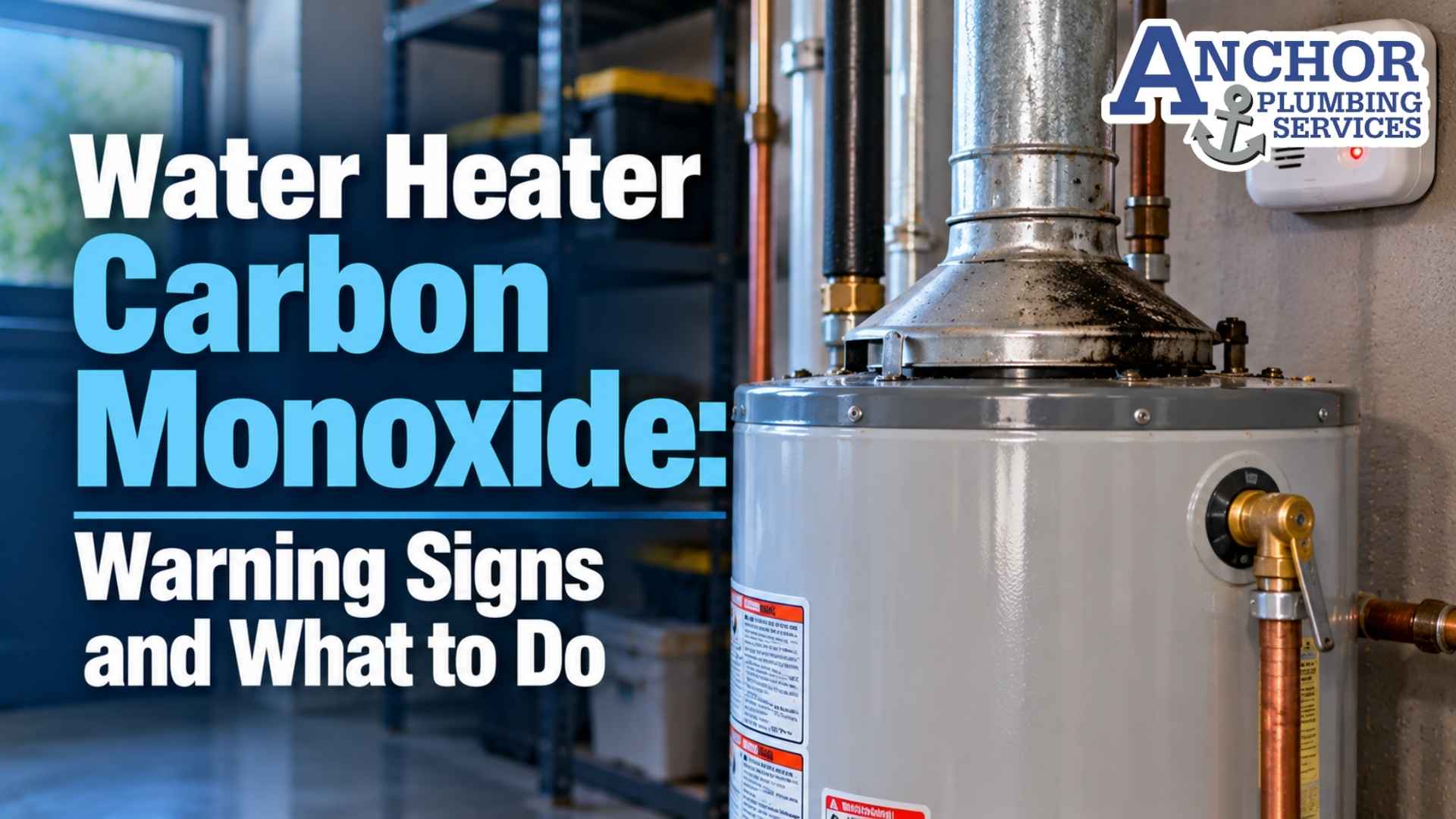
- Soot or black scorch marks around the draft hood, the flue connection, or the top of the tank. This is the clearest single indicator of exhaust spilling into the room.
- A yellow or orange burner flame instead of steady blue. Yellow flame indicates incomplete combustion and elevated carbon monoxide production.
- Rust, corrosion, or visible holes on the flue pipe, especially at joints and elbows.
- A flue pipe that has separated, sagged, or pulled away from the draft hood.
- Excessive condensation on windows in the room housing the water heater, which indicates combustion moisture is not venting.
- A stale, stuffy, or oddly warm feeling in the utility space when the burner runs.
- The pilot light blows out repeatedly, which can indicate backdrafting through the draft hood.
Physiological signs in the household
Carbon monoxide binds to hemoglobin roughly 200 times more readily than oxygen, which starves tissue of oxygen even while a person breathes normally. Early symptoms resemble flu, food poisoning, or a hangover, which is why exposure often goes unrecognized.
| Mild exposure | Moderate exposure | Severe exposure |
|---|---|---|
| Dull headache | Throbbing headache | Confusion or disorientation |
| Mild nausea | Drowsiness | Loss of coordination |
| Fatigue | Vomiting | Chest pain |
| Dizziness | Rapid heart rate | Seizure |
| Shortness of breath on exertion | Blurred vision | Loss of consciousness |
| The pattern that distinguishes carbon monoxide from illness
Symptoms that ease within hours of leaving the house and return after coming home point strongly to carbon monoxide rather than a virus. The same applies when several people in the household feel unwell at once, or when pets show symptoms alongside people. A flu that everyone catches simultaneously and that clears whenever the family goes out is worth investigating as a gas problem. |
Infants, older adults, people with heart or lung conditions, and pregnant people show effects at lower concentrations and shorter exposures. A household where only the youngest or oldest member feels unwell still warrants investigation.
How to Check a Water Heater for Carbon Monoxide
A homeowner can perform two safe checks. Neither replaces a professional combustion analysis, and neither should delay evacuation if symptoms are present.
Install a carbon monoxide alarm
A listed carbon monoxide alarm is the only reliable detection method available to a homeowner. Human senses cannot detect the gas at any concentration.
- Install an alarm on every level of the home. In San Antonio homes with an attached garage, place one near the garage entry door as well.
- Place one within 10 feet of each sleeping area so it wakes occupants.
- Place one in or near the room housing the water heater and any other gas appliance.
- Mount according to manufacturer instructions. Carbon monoxide mixes with air rather than rising or sinking, so wall or ceiling placement both work when the instructions allow it.
- Test monthly using the test button. Replace batteries per the manufacturer instructions – some modern alarms have sealed 10 year batteries that are not user replaceable.
- Replace the alarm every 5 to 10 years per the manufacturer instructions. The sensing element degrades whether or not the alarm ever sounds.
The draft test
A simple draft test shows whether the flue is drawing exhaust upward. It requires only a lit incense stick or a match. Do not perform this test if anyone in the home has symptoms or a carbon monoxide alarm is sounding – evacuate instead.
- Run hot water at a nearby fixture for several minutes so the water heater burner fires and reaches steady operation.
- Close windows and exterior doors, then turn on the kitchen exhaust fan, bathroom fans, and clothes dryer. This recreates worst case depressurization.
- Hold a lit incense stick or a just extinguished match near the edge of the draft hood at the top of the water heater.
- Watch the smoke. A passing result is smoke drawn steadily up into the draft hood, which means the flue is drawing correctly.
- Smoke pushed away from the hood, or blown back into the room, indicates backdrafting. Turn off the water heater at the gas control, ventilate the space, and schedule a professional inspection.
This test shows draft direction only. It does not measure carbon monoxide concentration and cannot detect a cracked flue baffle or elevated combustion output. A passing result is reassuring but not conclusive.
How Long Does Carbon Monoxide Exposure Take to Cause Harm?
The time to harm depends on concentration. Carbon monoxide is measured in parts per million, abbreviated ppm.
| Concentration | Effect | Timeframe |
| 9 ppm | Maximum recommended indoor level | Continuous exposure limit |
| 50 ppm | OSHA 8 hour TWA limit for workplaces | 8 hour workday average |
| 70 ppm | UL 2034 alarm trigger threshold | Alarm sounds at this level |
| 200 ppm | Headache, dizziness, nausea | After 2 to 3 hours |
| 400 ppm | Life threatening | Within 3 hours |
| 800 ppm and above | Unconsciousness, death | Within 1 to 2 hours |
Low level chronic exposure carries its own risk even when no acute episode occurs. Weeks or months at concentrations too low to trigger an alarm can produce persistent headaches, fatigue, and cognitive difficulty. A household with unexplained ongoing symptoms and a gas water heater over 10 years old has reason to request a combustion analysis.
Sleep removes the person’s ability to recognize symptoms and act on them. This is why alarm placement near bedrooms matters more than any other location in the home.
What to Do If You Suspect Carbon Monoxide From Your Water Heater
Act in this order. Do not reverse the sequence.
- Get everyone outside into fresh air, including pets. Do not stop to gather belongings, open windows, or shut off appliances.
- Call 911 from outside. Report suspected carbon monoxide and describe any symptoms. The fire department carries meters and can measure concentrations before anyone reenters.
- Seek medical attention for anyone with symptoms. Carbon monoxide poisoning is confirmed with a blood test and treated with oxygen. Symptoms that seem mild can still indicate meaningful exposure.
- Contact the gas utility. In San Antonio, CPS Energy responds to gas emergencies at 210-353-4357.
- Stay out until cleared by the fire department or the utility. Carbon monoxide lingers in a closed structure and reentering before ventilation is complete restarts the exposure.
- Schedule a licensed plumber to inspect the water heater before returning it to service. The appliance stays off until the venting failure is identified and corrected.
A carbon monoxide alarm sounding is sufficient reason to follow this sequence. Do not silence the alarm and wait to see whether it sounds again. Alarms have a false alarm rate but the cost of treating a real event as false is not recoverable.
How to Prevent Carbon Monoxide Problems From a Water Heater
- Schedule an annual gas appliance inspection. A plumber checks draft, inspects the flue, examines the burner flame, and verifies combustion air supply.
- Install and maintain carbon monoxide alarms on every level and near sleeping areas. Replace batteries per the manufacturer instructions. Replace the alarm every 5 to 10 years per the manufacturer.
- Keep the area around the water heater clear. Stored boxes, laundry, and paint cans block combustion air openings and create fire hazards.
- Have the flame arrestor screen and burner assembly inspected annually as part of a professional service visit. On most FVIR water heaters, accessing the arrestor requires removing the burner assembly. This is not a homeowner task.
- Never block or cover combustion air vents in a utility closet, even temporarily during cold weather.
- Have venting evaluated after any renovation that seals the building envelope, adds a powerful exhaust fan, or encloses a previously open utility space.
- Replace a naturally vented gas water heater that is 10 years old or older if it shows signs of flue corrosion or declining draft.
Age matters here more than most homeowners realize. Flue corrosion, burner fouling, and draft hood deterioration all progress with the same years that bring the tank toward failure. The water heater lifespan guide covers how to determine the age of a unit from its serial number and what other failure risks arrive alongside it.
Frequently Asked Questions
Can a water heater let off carbon monoxide?
A gas or propane water heater produces carbon monoxide as a normal combustion byproduct. Properly vented units send all of it outside through the flue. Carbon monoxide enters the living space only when venting fails through blockage, backdrafting, corrosion, or improper installation.
What are two warning signs of carbon monoxide in a house?
Soot or black scorch marks around a gas appliance and household symptoms that improve when everyone leaves the house are the two clearest warning signs. A yellow rather than blue burner flame and excessive window condensation also indicate a venting problem.
How long do you have to be exposed to get carbon monoxide poisoning?
At 200 parts per million, headache, dizziness, and nausea develop after 2 to 3 hours. At 400 ppm, exposure becomes life threatening within 3 hours. At 800 ppm and above, unconsciousness and death can occur within 1 to 2 hours. Lower chronic levels cause harm over weeks or months.
Can a tankless water heater produce carbon monoxide?
Gas fired tankless water heaters produce carbon monoxide like any gas appliance. Most use sealed combustion with a direct vent that draws outside air and exhausts outside, which reduces spillage risk. A damaged vent or a failed seal still creates a hazard.
How much carbon monoxide does a water heater produce?
A correctly operating gas water heater produces low levels that vent entirely outside. A unit with restricted combustion air or a fouled burner produces substantially more. Concentration in the home depends on the venting failure rather than the appliance output alone, which is why a combustion analysis measures both.
Will a carbon monoxide alarm detect a water heater leak?
A working carbon monoxide alarm detects elevated levels from any source including the water heater. Place one near the water heater and one within 10 feet of each sleeping area. Alarms respond to concentration in the air, not to which appliance produced it.
Does a water heater in the garage still pose a risk?
A garage installation reduces but does not eliminate risk. Attached garages share air with the home through shared walls, ceiling penetrations, and the connecting door. Garage units also accumulate lint and dust on the flame arrestor screen faster, which disrupts combustion.
Should I turn off my water heater if the carbon monoxide alarm goes off?
Leave first, then call 911 from outside. Do not spend time shutting off appliances while the alarm sounds. Once the fire department clears the building and identifies the source, a plumber shuts the appliance down safely and inspects the venting.
Schedule a Gas Water Heater Safety Inspection in San Antonio
Anchor Plumbing Services inspects gas water heater venting, draft, and combustion across San Antonio and surrounding Bexar County communities. A technician performs a draft test under worst case depressurization, inspects the flue for corrosion and blockage, examines burner flame quality, and verifies that combustion air supply meets code. Every job runs under Master Plumber Gerald S. Cortez (Texas License #41829) with a flat rate written quote before work begins.
Call 210-843-5800 to schedule gas water heater inspection in San Antonio or read our 4.9 star plumbing reviews from more than 1,500 customers.