

A burst pipe is a plumbing emergency that can flood a San Antonio home in minutes. Immediate shutoff and safe containment reduce water damage and repair cost. This guide explains the exact steps to take before a professional plumber arrives, so your plumbing system can be isolated, protected, and repaired faster.
What should you do immediately after a pipe bursts?
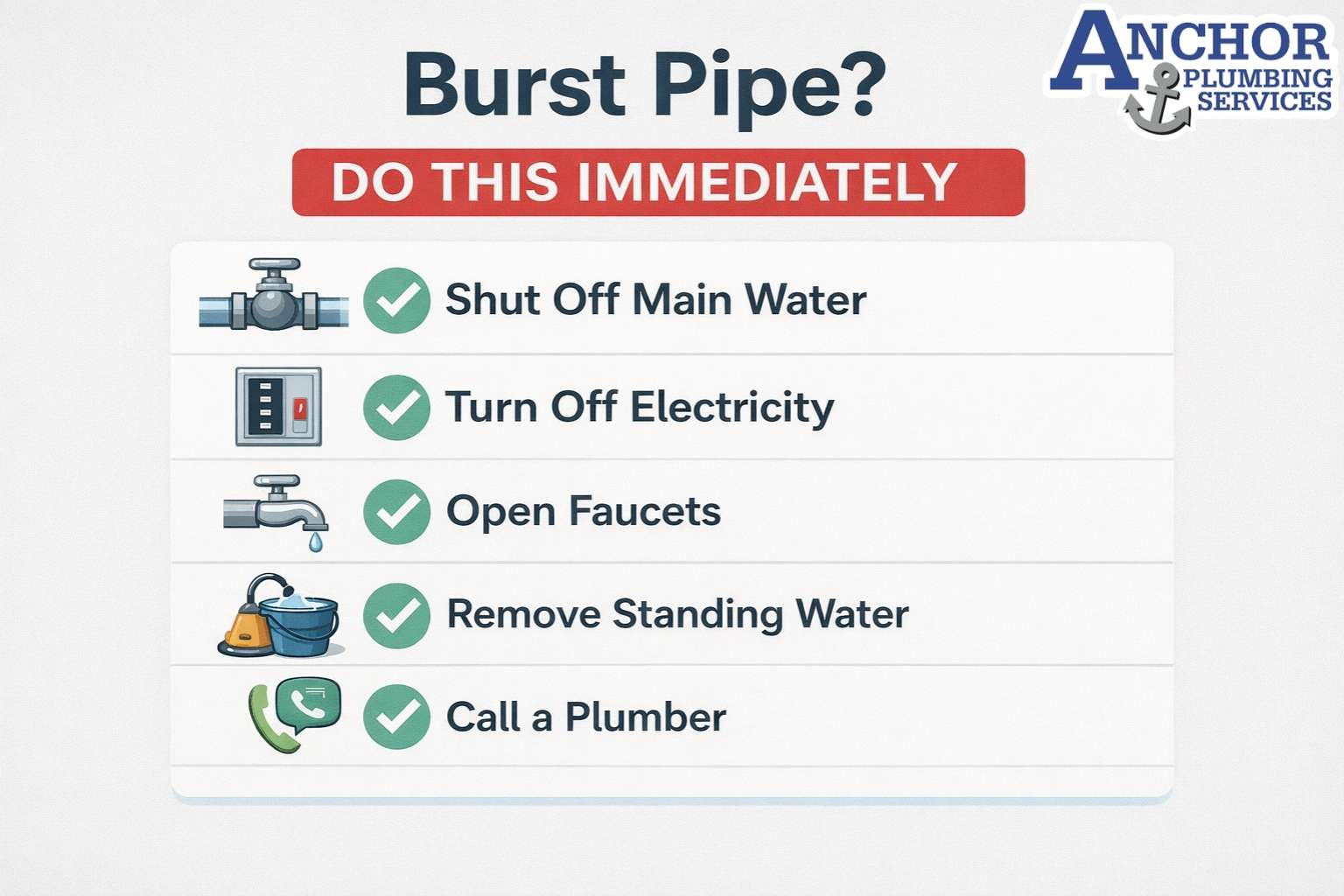
After a pipe bursts, shut off the main water supply immediately, turn off electricity in affected areas, and begin containing water to limit damage.
- Shut off the main water valve: Turn off the main water supply to stop active flooding. The shut off valve is commonly near the water meter, near the water heater, in a crawl space, or on the perimeter wall where the water enters the home.
- Turn off electrical power near water: If water is near outlets, cords, or appliances, isolate power at the electrical panel for the affected area. Do not use any appliances near standing water because electrocution risk increases when water contacts electrical equipment.
- Open faucets to relieve pressure: Turn on cold and hot faucets to drain trapped water and reduce pressure in the plumbing system. Leaving faucets open can help prevent additional pipe damage while you wait.
- Contain and remove leaking water: Use towels, buckets, and a wet vacuum if it is safe. Move valuables away from wet flooring and begin drying with fans to limit secondary damage.
- Call a professional plumber: Contact an emergency plumbing service and explain the leak location and whether ceilings or walls are wet so the repair plan can be prioritized.
How do you shut off the main water supply during a burst pipe?
Shutting off the main water valve stops the flow of water and prevents further flooding from a burst pipe.
- Locate the main shut off valve: Common locations include the water meter box, near the water heater, in a crawl space, in a basement, or near the perimeter wall where the water supply enters the home. If you cannot find an indoor valve, the shut off may be in an outdoor ground level utility box facing the street, near where your property meets the street.
- Identify the valve type: A ball valve uses a lever handle. A gate valve uses a wheel shaped handle.
- Turn the valve to the off position: For a ball valve, move the lever about 90 degrees until it stops. For a gate valve, turn the wheel clockwise until it fully stops.
- Confirm the water is off: Open a cold faucet and then a hot faucet. Flow should slow and stop as lines drain. If water keeps running at full pressure, the valve may be in a different location or may not be closing fully.
Should you turn off electricity when a pipe bursts?
Electricity should be turned off if water is near outlets, appliances, or electrical panels to prevent shock or fire risk.
Water and electrical equipment create a direct safety risk. Basements, utility rooms, kitchens, laundry areas, and garages are higher risk zones because they often have appliances, cords, and wall outlets close to floors.
How to shut off power safely
- Stand in a dry area and keep your hands dry.
- Go to the electrical panel and turn off the breaker for the affected room, or shut off the main breaker if water is spreading and you cannot isolate the area quickly.
- Do not plug in fans or vacuums until the area is dry and power is confirmed off.
When not to touch electrical systems:
Do not touch the electrical panel if you must stand in water, if the panel area is wet, or if you see sparking or burning smell. In those cases, move to a dry area and call a professional for guidance while you wait for the plumber.
How you limit water damage before the plumber arrives?
Limiting water damage involves removing standing water quickly and protecting walls, floors, and belongings.
- Remove standing water fast: Use towels and buckets first, then a wet vacuum if the area is safe and power is off. Dry thoroughly with fans to reduce mold risk.
- Protect flooring and drywall: Move furniture, rugs, and electronics away from wet flooring. Elevate items on plastic bins or wood blocks to reduce absorption into carpet and baseboards.
- Drain remaining water from the plumbing system: Open faucets and flush toilets to drain water trapped in the lines and relieve pressure while you wait.
- Increase airflow in wet areas: Open cabinets under sinks and open interior doors to improve air movement and speed drying inside wall cavities and under counters.
- Document damage for insurance: Take photos of wet drywall, flooring, and damaged furniture. One guide notes average water damage restoration costs are nearly $3,500, so documentation supports faster claim handling.
What should you avoid doing after a pipe bursts?
Avoid using electrical devices near water, delaying repairs, or attempting permanent fixes yourself.
- Do not use appliances or power tools near standing water: A burst pipe can leave hidden puddles near outlets and cords. Using appliances near standing water increases electrocution risk.
- Do not assume the problem is solved after shut off: A slow leak can continue from residual water in the line or a second damaged section. Keep monitoring wet spots and dripping ceilings.
- Do not rely on tape, putty, or sealant as a permanent repair: Temporary patches can create false security and allow continued moisture inside walls, which increases drywall and flooring damage.
- Do not turn the water back on without inspection: Restoring water pressure can restart flooding if the burst section is not isolated or capped. Keep the main water supply off until a plumber confirms the repair is secure.
What causes pipes to burst in San Antonio homes?
Burst pipes in San Antonio homes are commonly caused by freezing temperatures, aging pipes, corrosion, and high water pressure.
Short winter freezes can trigger bursts because water expands when it freezes inside a pipe. That expansion increases pressure until a weak section ruptures. Pipes can freeze when temperatures drop below 20 degrees, when lines sit in garages, crawl spaces, attics, or cabinets, and when insulation is missing or poor. A Southern climate does not eliminate freeze risk, especially when pipes are outside or exposed during a sudden cold snap.
Aging and corrosion also weaken pipe walls and joints. Older copper, brass, or galvanized pipes can corrode, and damaged pipe joints can fail under normal use when the material is already compromised.
High water pressure increases the chance of rupture. One plumbing guide notes that pressure higher than 60 psi can contribute to leaks, and too much pressure can damage plumbing and cause ruptures along the system.
Previous leaks or repairs are also a warning sign. A prior drip often means the pipe or joint is already weakened, so the next pressure event or freeze can turn a small leak into a burst.
How can you tell if a pipe has burst behind a wall or slab?
Hidden burst pipes often show signs such as sudden pressure loss, water stains, or unexplained pooling.
A sudden drop in water pressure can signal a burst, especially during a hard freeze when pipes are most likely to fail near exterior walls. Visible wall clues include water stains on ceilings or walls and paint or wallpaper that starts bubbling or peeling as moisture builds behind drywall.
Flooring clues include soft spots, warped areas, or damp flooring that appears without a clear spill source. A musty odor or mold smell can indicate trapped moisture behind walls or under floors.
A rising water bill is another strong signal. Continuous flow from a hidden leak often shows up as a spike on the water meter compared with past billing periods.
If you want, share the next headings and I will keep building the article section by section in the same semantic format.
Why burst pipe repair requires a licensed plumber
Burst pipe repairs require licensed plumbers to safely replace damaged sections and prevent future leaks.
A burst pipe usually needs more than a patch. A licensed plumber determines whether the right fix is pipe replacement, a new fitting, or a section rebuild based on the pipe material, the failed joint, and the location of the break. This matters because an incorrect repair can create repeat leaks, unstable water pressure, and hidden water damage inside walls or under flooring.
A licensed plumber also completes the work with verification steps that protect the home long term. Pressure testing confirms the repaired section holds under normal operating pressure and helps identify a second weak point before water is restored.
Code compliance is another reason. Licensed plumbers understand code requirements for supply lines, safety shut offs, venting, and pipe sizing, which reduces the risk of an unsafe installation and failed inspection.
Professional repair also helps prevent secondary damage. Proper isolation, secure connections, and verified performance reduce the chance of moisture remaining inside a wall cavity, which can lead to mold and structural deterioration.
How Anchor Plumbing Services handles burst pipe repair in San Antonio
Anchor Plumbing Services handles burst pipe repair in San Antonio with a clear emergency process that focuses on accurate diagnosis and reliable restoration.
- Inspect: We start by locating the failure point and checking nearby areas for secondary leaks.
- Diagnose: We explain what burst, why it failed, and whether the right solution is a targeted repair or pipe replacement.
- Quote: You receive flat rate pricing and a written quote before work begins.
- Repair: Our team completes burst pipe repair and can coordinate related services such as water leak detection and slab leak repair when the source is hidden.
- Test: We restore water service carefully and test the repair for stability and leak free operation.
Every job is led by a Master Plumber and performed by a Texas licensed, insured team with 24 hour emergency service. We serve San Antonio, Helotes, New Braunfels, Stone Oak, West San Antonio, and Northwest San Antonio. Our goal is to reduce downtime, prevent repeat failures, and restore safe water use as quickly as possible.