

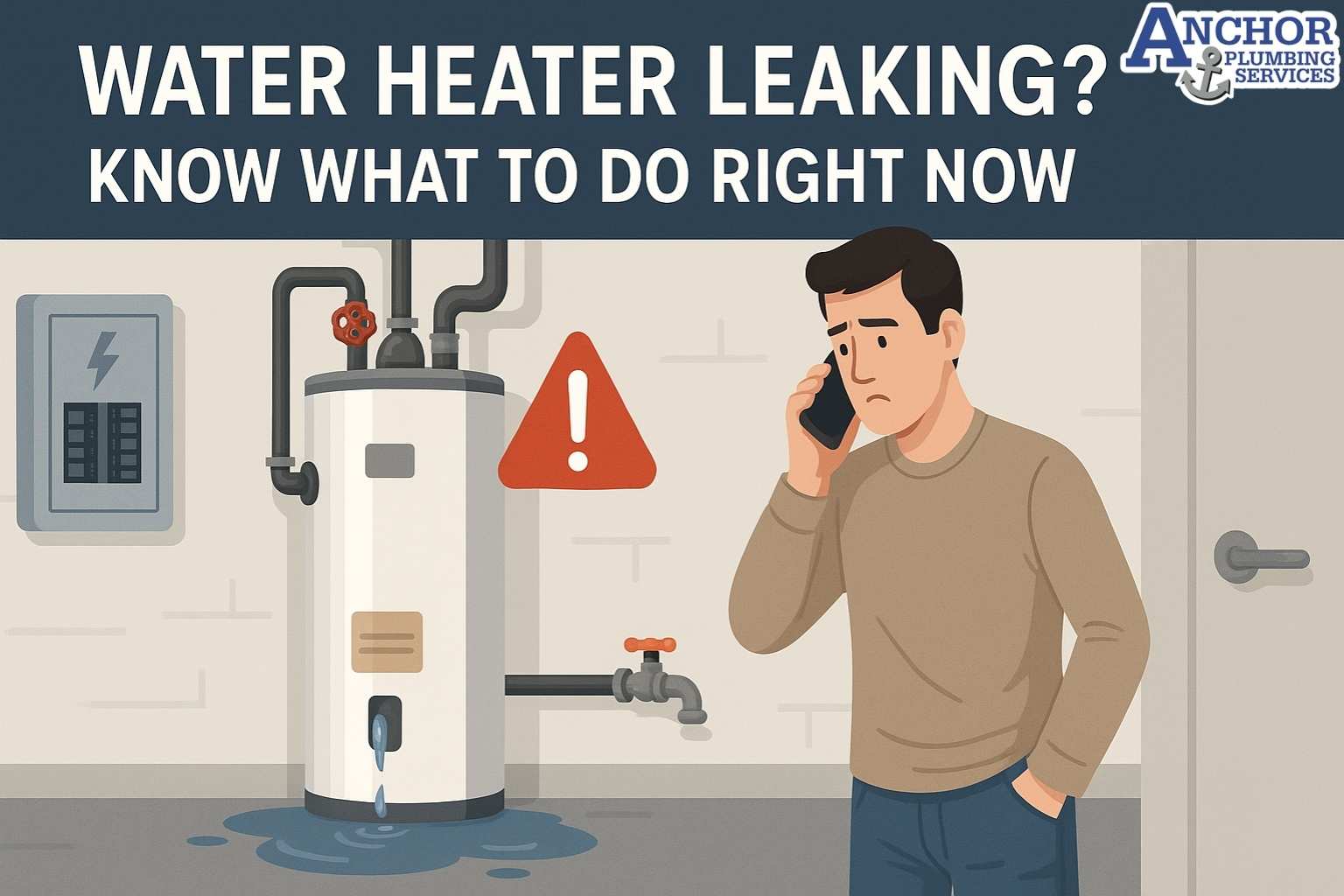
A leaking water heater needs fast action because escaping water spreads quickly and can damage floors, walls, and nearby electrical components. This guide explains simple steps you can take right now to protect your home, limit damage, and stay safe. It covers both electric and gas water heaters and explains when to shut off water and power. Local pros in San Antonio can assist if the leak is severe or sudden.
What does it mean when your water heater is leaking?
A leaking water heater indicates that water from the tank or connected fittings is escaping and forming puddles on the floor. This is different from normal condensation or a brief drip from a temperature and pressure discharge pipe. Condensation dries quickly, but a true leak leaves steady moisture around the base or behind the unit.
Any ongoing pooling suggests that pressurized water is leaving the system. This water can saturate drywall, damage flooring, weaken the surrounding structure, and increase the risk of mold. A consistent leak also accelerates rust on metal surfaces and can push a weakened tank toward failure.
The leak source can sit at the top fittings, the side valves, or the bottom of the tank. A steady stream or repeated puddle that returns after drying indicates an active problem. The following sections give immediate steps to stay safe, control water, and prepare for a safe shutdown. These steps help until a professional can diagnose the issue without requiring deep technical repair skills from the homeowner.
What should you do first when you notice a water heater leak?
Clear the area, protect yourself, and confirm where the water is coming from before taking any shutdown steps.
- Keep family members, children, and pets away from the wet area.
- Avoid stepping in water near electrical outlets, cords, or the base of an electric water heater.
- Take quick photos or a short video with a smartphone to document what you see.
- Place towels, a pan, or a shallow container to slow the spread of a small leak if it is safe to do so.
- Look around the heater for visible moisture at the top fittings, side valves, or bottom seam without touching wires or gas controls.
If water begins to spread quickly or you see a steady stream coming from the tank, move to the shutdown steps in the next section. This early check helps you understand the severity of the leak and protects the home during the first few minutes of the emergency.
When should you shut off water to a leaking water heater?
You shut off water when the leak is more than a minor drip or when you cannot control the spread with towels or a container.
A water heater has a dedicated cold water shutoff valve on the supply pipe at the top of the tank. Closing this valve isolates the heater from the rest of the plumbing system. The valve may be a round gate valve that turns clockwise to close or a lever style ball valve that moves to a perpendicular position to stop flow. This step reduces water entering the tank and slows the leak.
If the cold shutoff valve is corroded, stuck, or hard to reach, switch to the main house shutoff. The main valve sits at the perimeter of the home or near the street connection and stops water for the entire property. Use this option when you cannot isolate the heater directly or when the leak is spreading faster than you can contain.
Never force a stubborn valve. Forcing a handle can snap the stem and worsen the situation. If the valve will not move with gentle pressure, call a plumber. The goal is to isolate the water heater safely without damaging the supply line or valve body.
When should you shut off power or gas to a leaking water heater?

You shut off power or gas when the leak is significant, when water collects near electrical or gas connections, or when the tank may drain to a low level that exposes heating components.
For an electric water heater, locate the dedicated breaker in the electrical panel. Switch the breaker to the off position to de-energize the heater. Electricity and standing water create serious shock risk, so do not touch the panel or heater if you must stand in water to reach them. In that situation, step away and call an electrician or plumber to shut the system down safely.
For a gas water heater, turn the gas control knob on the front of the unit to the off or pilot setting. Some homes also have a nearby gas shutoff valve on the supply line that closes with a quarter turn. Use this valve only if you can reach it without stepping in water. A safe shutdown reduces fuel flow and prevents the burner from operating while the tank is compromised.
A leaking tank can drain enough water to expose electric elements or leave the bottom of a gas heater overheated. Heating components must stay fully submerged or correctly supplied with water to avoid damage. Turning off power or gas protects the heater from running dry and prevents overheating or combustion issues.
A recognized safety guideline notes that any appliance exposed to water near electrical or gas components should be disconnected until inspected by a qualified professional. This principle applies directly to leaking water heaters and supports careful, hazard aware shutdown steps.
Where is the water heater leak coming from?
Many water heater leaks originate at the top fittings, side valves, or the bottom of the tank where corrosion can open small cracks or pinholes.
Finding the leak location helps you understand whether the issue is repairable or whether the tank is failing internally. A loose connection or faulty valve often allows a controlled repair. A rusted tank base usually signals that the tank shell has weakened and may require replacement. A simple visual check gives useful clues without the need for tools.
Check the top of the water heater first. Look at the cold inlet, hot outlet, and any flex connectors for signs of moisture. Small drips often travel down the side of the tank, so trace the path of the water if you can reach it safely.
Move to the side of the tank next. Inspect the temperature and pressure relief valve and the discharge pipe. These parts can release water when pressure rises or when the valve seal wears out. A slow drip from the discharge pipe often points to a valve issue rather than a tank problem.
Check the bottom of the heater last. Water in the pan or moisture emerging from under the tank shell can indicate internal corrosion. When the tank rusts through, water seeps out slowly at first and then escalates. This pattern often marks the final stage of tank life.
A clear view of the top, side, and base helps you understand where the leak originates and how serious it may be before a plumber arrives.

How do you check for a leak at the top of the water heater?
To check for a top leak, inspect the cold inlet and hot outlet connections, the metal nipples, and any flex lines attached to the top of the tank.
Look for water on or around the top insulation. Damp or darkened pipe insulation also signals a slow drip. Moisture may trace down the tank shell, so follow any streaks that travel downward. These streaks often reveal where water started before running along the surface.
Top leaks often involve loose fittings, failed nipples, or corroded pipe threads. Many of these issues are repairable with proper tightening or replacement of worn parts. A plumber can restore seals if the leak source sits at a connection rather than inside the tank.
A small drip from a top fitting behaves differently from a steady flow. A slow drip might pool at the top rim, while a faster drip runs down the side immediately. Identifying this pattern helps distinguish a simple connection issue from a more serious internal problem.
How do you check for a leak at the bottom of the water heater?
To check for a bottom leak, examine the drain valve, the temperature and pressure discharge outlet, the tank base, and the pan beneath the heater.
Start with the drain valve. Look for drops forming at the spout or around the valve body. A worn washer or loose valve can allow intermittent moisture. Next, inspect the discharge pipe from the temperature and pressure relief valve. Water near this pipe may indicate that the valve is releasing water rather than the tank shell leaking.
Then look directly at the bottom of the tank. Water emerging from under the tank shell or collecting in the pan suggests internal corrosion. The shell can weaken as sediment and rust accumulate. When the metal fails, water seeps from the base and saturates the pan.
A drip from a drain valve or a relief pipe often points to a repairable valve issue. A continuous leak from under the tank usually indicates a rusted or split tank that needs replacement rather than repair. Checking these areas helps you understand whether the leak source is a valve, a fitting, or the tank itself.
Is a leaking water heater dangerous?
A leaking water heater can be dangerous because it combines hot water, electricity or gas, and structural damage that can escalate quickly if the leak spreads.
Water near electrical elements, thermostats, or wiring creates a shock risk. If water reaches an electrical panel or the base of an electric heater, touching equipment or stepping in the pooled water can expose you to electrical current. Gas heaters carry different risks. Water around the burner area or gas components can interfere with combustion and create unsafe operating conditions.
A sudden release of hot water can also cause burns. A failing tank may discharge very hot water without warning as internal pressure changes. This temperature change can injure anyone standing close to the heater or walking through the utility area.
Leaking water soaks drywall, subfloor, and framing. Prolonged moisture weakens structural materials and increases the likelihood of mold. Mold forms when damp surfaces remain wet long enough for spores to grow. These conditions become more severe when water continues to pool for hours or days.
Standing in water near electrical equipment is unsafe. If you are unsure whether electrical or gas components are wet or compromised, step back and contact a qualified professional. A recognized safety guideline states that any appliance exposed to water near electrical or fuel connections should be disconnected and inspected before further use.
Can a leaking water heater be repaired, or do you need a replacement?
Many valve and connection leaks on a water heater are repairable, but leaks coming from the tank body almost always require full replacement.
Some leaks originate from components that a plumber can repair. Loose fittings at the cold or hot nipples, flex line leaks, or worn seals at the temperature and pressure relief valve often respond to tightening or part replacement. A dripping drain valve at the base can also be repaired or replaced when the internal washer or body fails. These issues usually involve moderate cost and can restore normal operation.
Other leaks signal that the tank has reached the end of its service life. Water emerging from the bottom of the heater, rust staining around the seam, or moisture seeping through the insulation indicates tank shell damage. A split shell or rusted base cannot be sealed because the metal has weakened. Replacement becomes the appropriate solution.
Age influences this decision. A water heater near the end of its typical lifespan may not justify repair even if the leak is small. Warranty coverage can reduce replacement cost if the unit is still under protection. In hard water areas such as San Antonio, mineral buildup accelerates corrosion and shortens tank life. Sediment collects at the bottom, traps heat, and increases stress on the shell, which leads to earlier failure.
A plumber evaluates the leak type, the age of the heater, and the cost of repair versus replacement. This assessment helps determine whether repairing a valve or replacing the entire tank offers a better long term solution.
How do you prevent future water heater leaks, especially in hard water areas?

Preventing future water heater leaks requires a combination of regular maintenance, water quality management, and proper installation practices that protect the system over time.
Annual flushing removes sediment from the bottom of a tank. Sediment collects faster in hard water areas and traps heat at the base, which stresses the tank shell. Flushing slows this process and helps maintain stable temperature and efficiency.
Periodic anode rod inspections also protect the tank. The anode rod attracts corrosive minerals and slows rust inside the tank. Replacing a worn rod before it is fully consumed extends tank life and reduces the chance of internal corrosion that leads to leaks.
Checking valves and fittings for small drips prevents minor issues from becoming larger failures. The temperature and pressure relief valve, drain valve, and top connections should stay dry between uses. Early detection reduces water damage around the heater.
A water softener helps in very hard water regions because it slows scale buildup and reduces corrosion. Softer water protects both tank and tankless systems and lowers maintenance frequency. Correct pressure in the plumbing system also matters. A pressure regulator or thermal expansion tank can stabilize pressure and protect fittings.
Proper installation supports long term reliability. A secure stand, a drain pan, and correct drain routing limit damage even if a leak occurs. These steps together reduce corrosion, stabilize operating conditions, and extend the service life of the water heater.
What should you do before the plumber arrives for a leaking water heater?
Before the plumber arrives, prepare the area to reduce damage and give the technician clear access to the water heater.
Confirm that the water supply and power or gas are off if the leak is moderate or significant. This step protects the heater from running dry and reduces the spread of water. Move belongings, boxes, or stored items away from the wet area to prevent further damage.
Use fans or allow air to circulate around the damp floor if it is safe to do so. Circulation slows moisture buildup on walls and flooring. Keep photos or videos ready for records. Collect the model number and serial number from the label on the heater. This information helps the plumber identify replacement parts or estimate repair options more quickly.
Clear a safe path to the heater. Remove obstacles so the technician can reach the tank, valves, and pan without stepping over items. Avoid touching wiring, gas lines, or internal components. Gas line and electrical repairs require a licensed professional and should not be attempted by the homeowner.
Preparing the space and documentation helps the plumber work efficiently and reduces the time needed to diagnose the leak.
How does Anchor Plumbing Services handle emergency water heater leaks in San Antonio?
Anchor Plumbing Services responds to emergency water heater repair leaks with same day and twenty four hour service led by a Master Plumber and supported by licensed, insured technicians across San Antonio and nearby communities.
The process begins with a full inspection. The technician checks the heater, valves, discharge pipe, drain pan, and surrounding plumbing. The goal is to identify whether the leak originates from a fitting, a relief valve, or the tank itself. After inspecting, the plumber diagnoses the problem and explains whether a repair or replacement is the safest and most cost effective option.
Anchor provides flat rate pricing before work begins. The technician repairs valves or fittings when possible or replaces the heater when the tank has failed. After completing the work, the plumber tests the system to verify stable pressure, safe heating, and correct operation of all controls.
Anchor serves San Antonio, Helotes, New Braunfels, Stone Oak, and West and Northwest San Antonio with emergency support, clear diagnostics, and a satisfaction guarantee. Water heater leaks in hard water areas often connect to sediment and corrosion, so recommendations may include water softener or water quality improvements as part of long term protection.