

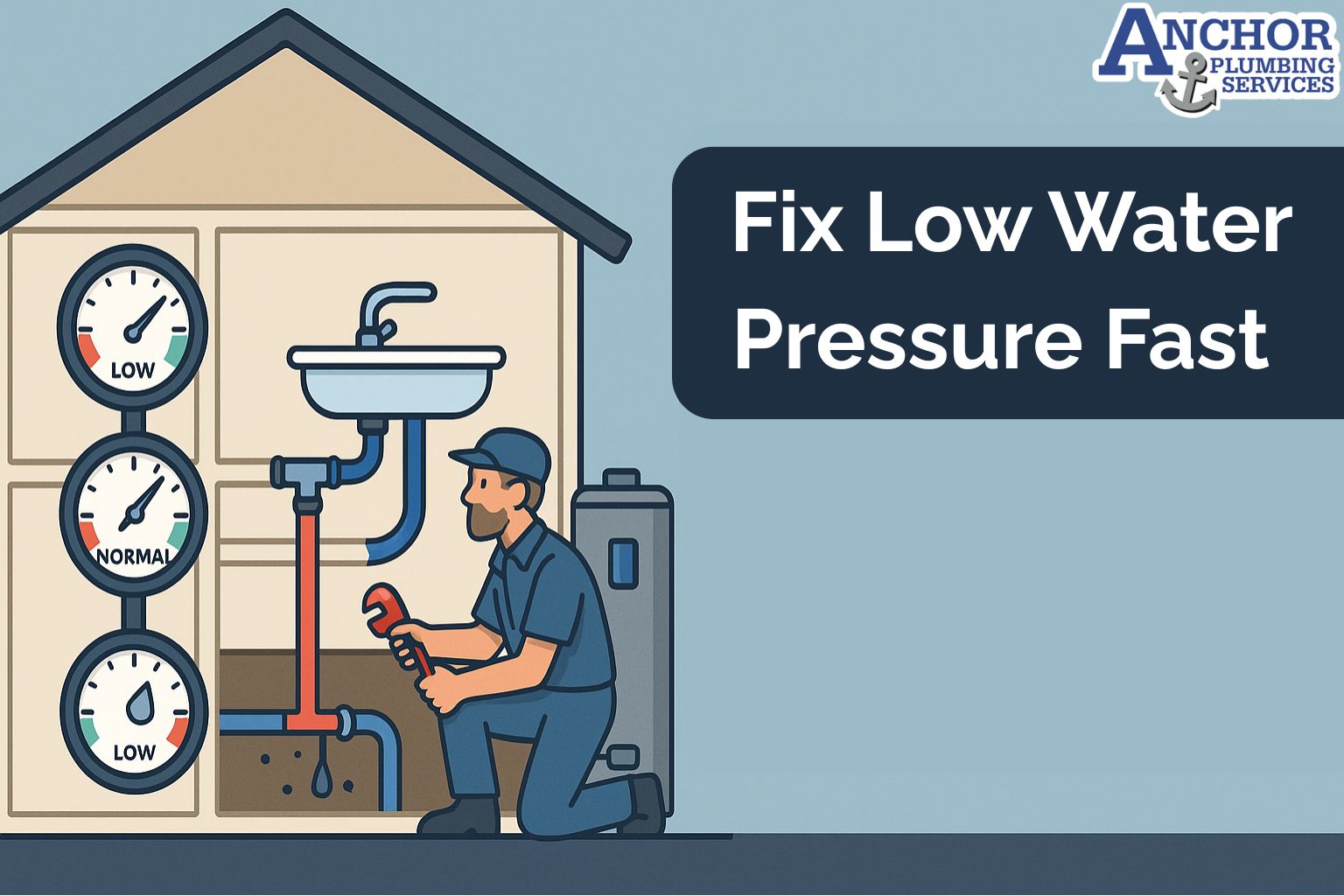
Low water pressure in your home usually means something is restricting water flow within the plumbing system. The most common reasons include a partially closed main shut-off valve, a hidden leak, or a failing pressure regulator. Normal residential water pressure ranges between 40 and 60 psi, and anything below this level can signal a plumbing imbalance or supply issue.
Water pressure drops when water cannot travel freely through the main supply lines or fixtures. The first step to identify the cause is to check whether the pressure loss affects one fixture or the entire house. If all faucets and showers have weak flow, the issue likely lies in the main supply, regulator, or underground piping. A licensed plumber uses diagnostic tools to measure system psi, locate restrictions, and restore balanced flow across your home.
What Does Low Water Pressure Mean for Your Plumbing System?
Low water pressure indicates reduced flow or increased resistance within your plumbing system. It means the water moving through pipes, valves, or fixtures meets friction or obstruction that prevents it from reaching normal velocity. Typical household pressure should stay steady between 40 and 60 psi to ensure consistent delivery to showers, faucets, and appliances.
When pressure falls below this range, fixtures release weaker streams, water heaters fill more slowly, and appliances like dishwashers or washing machines take longer to complete cycles. Over time, constant low pressure can strain pumps, cause inconsistent temperatures in mixed-valve showers, and highlight underlying corrosion or leaks inside the water lines.
Maintaining proper pressure ensures that every part of your plumbing system—from the main valve to the smallest faucet—functions efficiently and safely, preventing both water waste and long-term mechanical wear.
What Causes Sudden Low Water Pressure in a House?
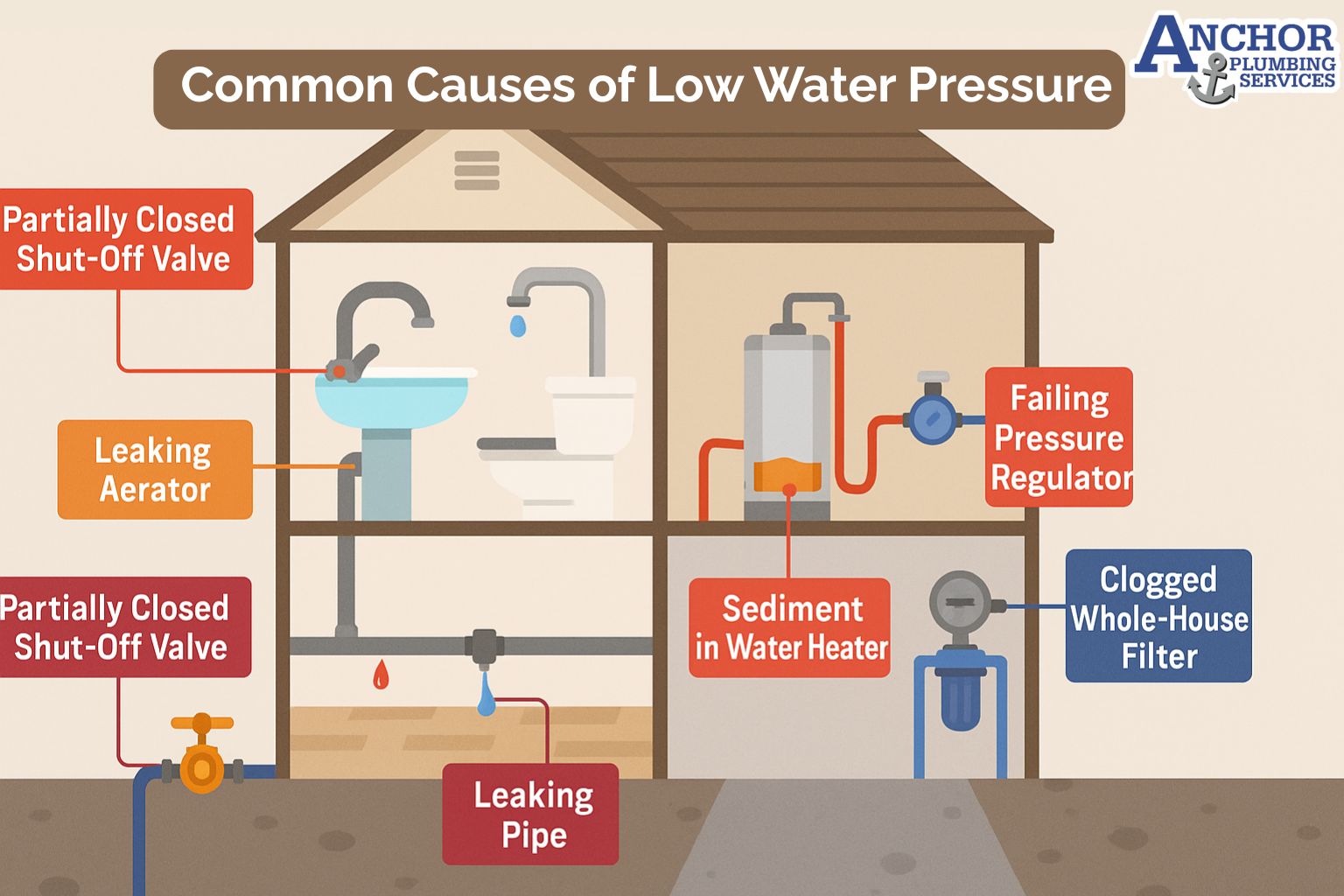
Most low water pressure problems occur because water cannot flow freely through part of the plumbing system. This restriction can come from mechanical failure, buildup, or an external supply issue. Identifying the right cause helps restore balanced pressure quickly and safely.
- Partially Closed Shut-Off Valve: The main shut-off valve controls water entering the home. When it is only partially open, flow is restricted throughout the system. Always verify that the valve handle is fully turned to the open position.
- Failing Pressure Regulator: A pressure regulator controls and stabilizes water entering your plumbing lines. When it malfunctions or wears out, it may cause inconsistent or weak pressure at all fixtures.
- Leaking Water Supply Line: Hidden leaks under the slab, behind walls, or near the meter divert water before it reaches your fixtures. Even small leaks reduce system psi and cause pressure to drop suddenly.
- Corroded or Clogged Pipes: Older galvanized or steel pipes narrow as mineral deposits build inside. This restricts flow, creating uneven pressure across different areas of the home.
- Clogged Aerators or Showerheads: Mineral buildup in faucet aerators or showerheads blocks openings and limits water release. Cleaning or replacing the fixture restores full flow.
- Sediment Buildup in Water Heater: When sediment settles at the bottom of the water heater, it can block outlets or reduce hot water flow. Flushing the tank once a year helps maintain normal pressure.
- Municipal Supply Issues: City maintenance, hydrant testing, or main line repairs can temporarily lower water pressure for entire neighborhoods. These drops usually resolve within a few hours.
- Peak Demand Hours: Pressure often dips when many homes use water simultaneously, such as early mornings or evenings. Installing a pressure booster system can help maintain consistent flow.
- Water Filter or Softener Blockage: Clogged filters or malfunctioning softeners restrict incoming flow. Regular cartridge changes and resin checks prevent sudden pressure loss.
- Loose Fittings or Deteriorated Connectors: Worn joints or damaged connectors can leak small amounts of water and gradually lower system pressure. Professional inspection ensures fittings stay sealed and watertight.
Aging pipes or hidden leaks often reduce overall flow. Recognizing the pattern of pressure loss—whether it affects one fixture or the entire home—helps pinpoint the true cause efficiently.
How to Diagnose the Source of Low Water Pressure?
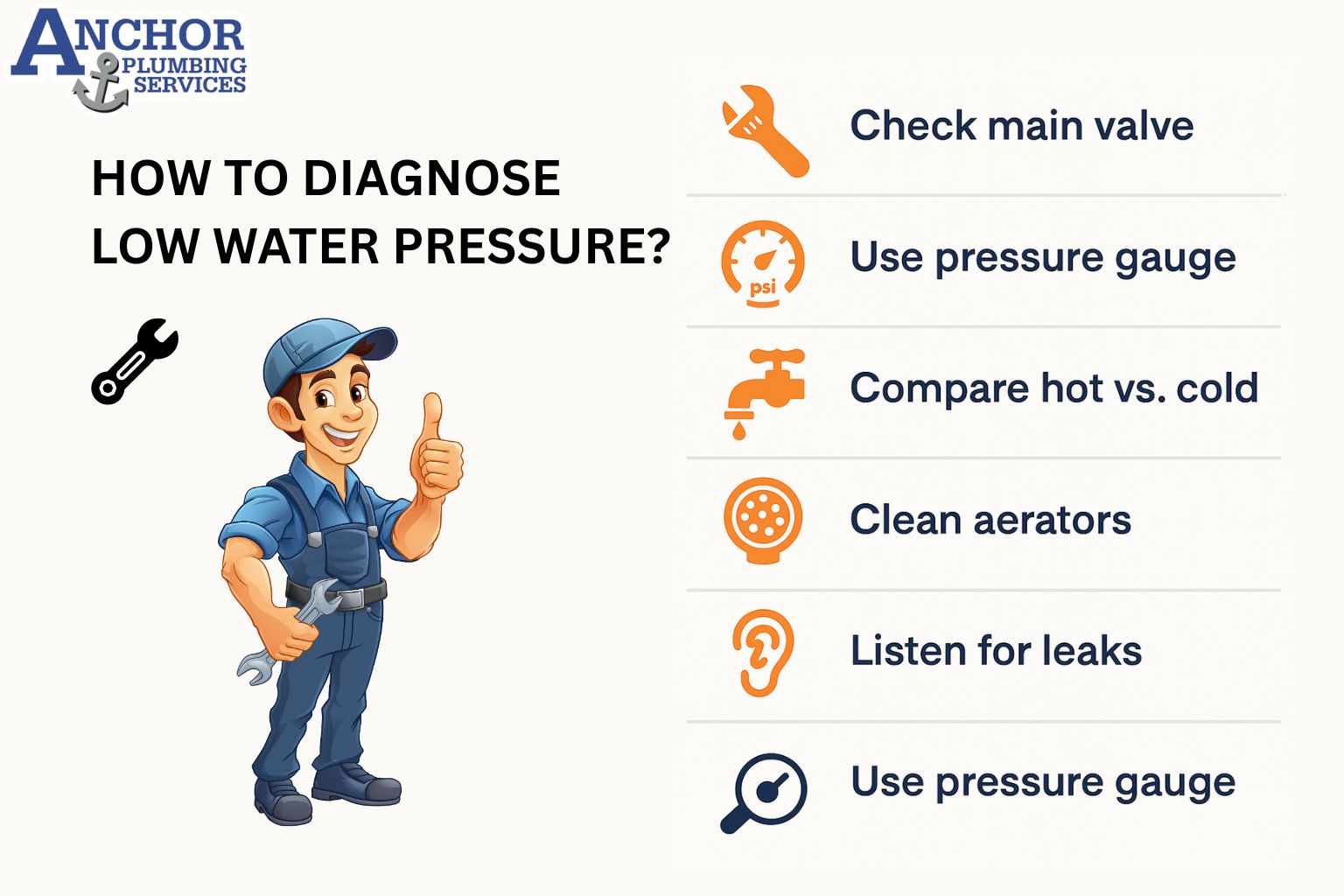
You can locate the issue by testing key areas of your plumbing system safely and systematically. A simple process helps identify whether the problem lies in a single fixture, a specific pipe, or the main supply line.
- Check the Main Shut-Off Valve: Ensure the valve near your water meter or entry point is completely open. A half-closed valve is one of the most common and easiest problems to fix.
- Measure Pressure with a Gauge: Attach a pressure gauge to an outdoor spigot or laundry faucet. Readings below 40 psi confirm a system-wide issue requiring further inspection.
- Compare Cold and Hot Water Pressure: If only the hot water line has weak flow, sediment buildup inside the water heater may be the cause. Equal pressure loss in both lines suggests a regulator or supply issue.
- Inspect Faucets for Sediment: Remove and clean aerators to check for calcium buildup. Restored pressure at one fixture means the issue is local, not whole-home.
- Listen for Leaks or Running Water Sounds: Audible dripping or running water when all fixtures are off signals a hidden leak. Professional leak detection tools can identify its location without wall damage.
Systematic testing narrows the source and helps determine whether a simple cleaning or professional water line repair is required to restore steady pressure.
How to Fix Low Water Pressure in Your Home
Fixing low water pressure starts with identifying whether the problem affects a single fixture or the entire plumbing system. Once the cause is known, homeowners can apply simple maintenance solutions or contact a licensed plumber for more complex repairs.
- Clean Aerators and Showerheads: Cleaning aerators restores normal flow when mineral deposits block water outlets. Unscrew the fixture tip, rinse out debris, and reattach to check for improved pressure.
- Adjust or Replace the Pressure Regulator: A malfunctioning pressure regulator can limit the water supply throughout the home. Plumbers replace faulty regulators to stabilize pressure and ensure balanced flow at all fixtures.
- Flush Sediment from the Water Heater: Sediment buildup in the water heater reduces hot water flow and affects household pressure balance. Flushing the tank once a year helps maintain steady output and extends equipment life.
- Repair Leaks or Repipe Corroded Lines: Leaks or corroded pipes reduce water delivery and pressure consistency. Repairing damaged sections or replacing older lines with PEX or copper restores full capacity and prevents future pressure loss.
- Contact a Licensed Plumber for Complex Repairs: Professional plumbers have diagnostic tools to detect leaks, adjust regulators, and clear obstructions without damaging your plumbing system. Timely service prevents recurring pressure issues and safeguards your home’s water infrastructure.
Consistent water pressure depends on a clear flow path and properly functioning components. Addressing minor issues early helps avoid major repairs later.
How Much Does It Cost to Fix Low Water Pressure?
The cost to fix low water pressure varies depending on the cause, repair complexity, and accessibility. Most minor fixes cost between $100 to $600, while larger repairs such as leak restoration or repiping can reach several thousand dollars.
| Cause | Typical Cost | Notes |
| Clogged aerator | $100–$150 | Simple cleaning or quick service visit |
| Pressure regulator replacement | $300–$600 | Includes parts and labor |
| Leak repair | $800–$2,000+ | Depends on location, wall access, and material |
| Full repipe | $4,000–$10,000 | Long-term upgrade for aging or corroded pipes |
Most minor repairs take less than two hours to complete, while repiping projects or underground leak repairs require multiple days. Major line repairs may reach higher costs, but they restore long-term stability, prevent water waste, and increase home value.
Professional plumbers evaluate your system’s condition, test pressure levels, and recommend the most efficient fix to restore normal flow safely and cost-effectively.
How to Prevent Future Water Pressure Problems
You can maintain steady water pressure by following a consistent plumbing maintenance routine and monitoring your system for early warning signs. Preventive care helps avoid costly repairs and keeps your home’s water flow stable.
- Schedule Annual Plumbing Inspections: Regular inspection prevents hidden leaks and detects pressure irregularities before they worsen. A licensed plumber can check valves, regulators, and connections to ensure optimal flow.
- Replace Aging Pipes Proactively: Older metal pipes corrode internally, reducing water flow. Replacing them with modern materials such as PEX or copper increases durability and prevents pressure fluctuations.
- Install a Booster System or Regulator: A booster pump or new pressure regulator maintains steady psi when municipal supply levels drop, ensuring consistent pressure at all fixtures.
- Maintain Clean Aerators and Filters: Cleaning faucet aerators and water filters every few months removes mineral buildup and debris, allowing smooth, unrestricted water flow throughout the system.
Consistent maintenance and professional inspections safeguard your plumbing system, ensuring reliable performance and balanced water pressure year-round.
Frequently Asked Questions About Low Water Pressure
What is normal household water pressure?
Normal residential water pressure typically ranges between 40 and 60 psi for balanced performance.
Why is my water pressure suddenly low?
It usually happens because of a leak, clogged pipe, or malfunctioning pressure regulator that restricts water flow.
Does low pressure mean a leak?
Often yes. A consistent drop across multiple fixtures commonly indicates a hidden plumbing leak or underground supply line issue.
How do I increase water pressure?
Adjust the pressure regulator, clean aerators, or contact a plumber to inspect the main water line for restrictions.
When should I call a plumber?
If pressure remains low after checking valves and cleaning fixtures, professional diagnostics are necessary to locate leaks or equipment failures.
Conclusion: Restoring Reliable Water Pressure
Consistent water pressure ensures comfort, efficiency, and the long-term health of your plumbing system. Most low-pressure problems stem from valve restrictions, sediment buildup, or leaks that reduce flow through household pipes.
Preventing future issues begins with regular maintenance, inspections, and timely repairs. Professional service ensures accurate diagnosis, safe repair, and steady psi restoration.
Anchor Plumbing Services restores strong and consistent water pressure through expert diagnostics, leak repair, and pressure regulator replacement. Our licensed San Antonio plumbers deliver precise, code-compliant solutions with transparent pricing and reliable workmanship you can trust.